Monday, April 16, 2012
Featured Author in the Madhouse: Cynthia Ravinski
Visuals, Imagery, and Crafting Story from Dream
By Cynthia Ravinski
I'm part of the EmotoBook Revolution. Let me tell you how that happened (I'm a story teller, that's what I do.) Writing an EmotoBook changed the way I look at writing. So let's start here.
For me, a story starts with a dream- vivid color and poignant action streaking across the movie screen of my resting mind with abstract gravitas. I think the strangest thing is that there are never any words.
If I decide an Idea is worth turning into a story, it's usually because it has haunted me for days and I'm thoroughly mad like the Hatter about the thing. And then, I only face the task of crafting it into something intelligible to other humans. Let me step aside here to say that without an Idea no writing can be done, there is only that familiar blank white screen with a blinking black cursor. With an Idea, I at least have something to hang some words on, from which I will shape my story.
Crafting a story is a very technical thing, and is separate from the story Idea. Simply relating events is not truly telling a story, it misses a lot of resonance. A writer's job is to craft a story so that black and white text creates an internal cinematic dreamscape for a reader. There are many tools a writers uses to do this. One of the most important, I think, is visual imagery. When readers look at text, all they see are black lines on white. I've always been completely seduced by a brief chain of words that can slip a ravishing scene into my head.
The idea of EmotoBooks as a literary form lodged in my mind and haunted me for days after I'd first heard of it. Using abstract imagery to enhance the reading experience tackles multiple areas of the brain, and appeals to my vivid dreamscapes that have no words. Louis Sullivan, an American architect, put it perfectly, "form ever follows function." EmotoBooks have a unique style and structure. They are all fast-paced, imagery-heavy short stories or serial novels containing abstract, emotionally provocative illustrations to depict what characters feel during peak moments of tension. These expressionistic elements provide both a cerebral and visual stimulation, which enhances the experience.
When I began the editing process for my EmotoSingle, Lingering in the Woods, it was glaringly obvious that my instinctive use of imagery was not as effective as I would have hoped. I've always tried to keep my stories visually balanced, like in my dreams, but it became apparent that in doing so, I reduced the impact of important scenes. Encouraged by my editor at Grit City, I intensified the imagery in the most powerful parts of the story as a seat for the abstract artwork going into the story. Through this craft element, I added a texture to the story I wouldn't have found before, visually highlighting the peaks and valleys of the plot.
Writing stories is a grand puzzle with no absolute solution. Trial and error is the best way through that maze. I only hope that my work's images burn lively in the minds of readers.
BIO: Cynthia Ravinski writes, among other things. From her coastal northern setting, she crafts stories in impossible worlds and dreams up crafty characters to occupy them. She's been an athlete, a co-pilot, and a world traveler. She's basked in the light of great poets, and has been educated to high degrees at UMaine Farmington and Seton Hill University. To say she is obsessed with drinking tea is an understatement. Visit her here to learn more.
Sunday, April 8, 2012
BOOK REVIEW: I'M NOT GUILTY
I’m Not Guilty
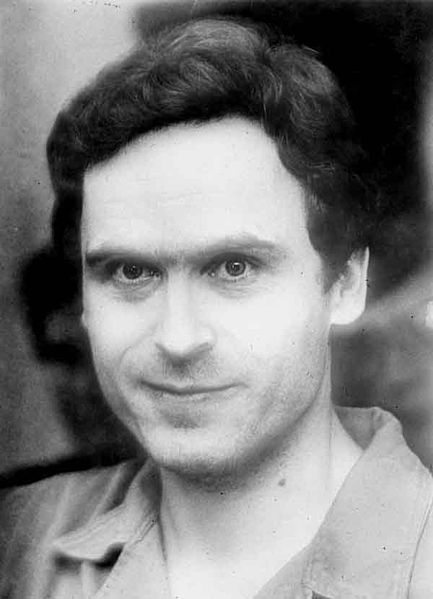
The Development of the Violent Mind: The Case of Ted Bundy
A Novel by Al Carlisle, PH.D.
Recently, I traveled to Salt Lake City, Utah for the World Horror Convention/Bram Stoker Awards. It was an amazing experience to meet so many talented writers and artists, and listen to the minds of the masters in the field. I sat in on a variety of lectures, went to the Salty Horror Film Festival (where I watched the award winning short film An Evening with my Comatose Mother) and took a writing workshop with Mort Castle where I practiced evoking truth in my fiction.
But one of the reasons I was drawn to the convention was that Al Carlisle would be speaking on the progression of serial killers and the ins and outs of multiple personality disorder. See, in addition to working on my thesis novel, I’ve been diligently researching an idea for a separate novel, and I thought that his lecture could help bleed some truth and realism into the character profile I’m working on. Also, for those of you that are unaware, I came very closer to majoring in forensic psychology, and even though I chose a more literary path, I still devour abnormal psychology articles and books on a regular basis. So when I found of that the lead psychologist on the Ted Bundy case was speaking at the event, I hoped on that plane quicker than you could say ‘serial killer.’
Before I get into the lecture though, here are some basic details about the case:
-Ted Bundy confessed to 30+ homicides before his execution in 1989.
-He is famous for his charming personality and his ability to lie and fool everyone around him. He would attack his victims at random (trolling, as he called it), and normally feign injury in order to entice them.
-Bundy became obsessed with his victims, and spent great amounts of time with the bodies after the murders. He would perform sexual acts on the corpses, and even claim that he bonded with them after they died, as if a part of their spirit became one with his.
-Bundy kept souvenirs. He decapitated at least 12 of his females, and kept their heads in his freezer, and when he grew tired of those, he would visit the dump sites, and spend time with his girls there.
- Oh, and Ted Bundy escaped from prison….twice.
Needless to say, Carlisle’s presentation was riveting.
I’ve read a lot about the minds of serial killers (Bundy in particular) and I’ve watched numerous documentaries on the subject as well, but there is something said for listening to someone in person who has actually been in contact and worked close with the killer. For instance, what really got me was when Carlisle talked about Bundy’s legendary charisma. Sure he knew that Ted was a cold blood killer, but he couldn’t deny that he liked the guy, and that’s why so many people couldn’t believe that Ted was capable of the murders. In fact, that’s what hooked me with the case. I wanted to know how someone that was so obviously guilty, could (1) convince himself that there was nothing wrong with what he was doing (2) charm everyone around him and (3) be as successful and skilled as he was in everyday life. Suffice it to say, I feel like I got all of my questions answered and it was a pleasure getting to meet Dr. Carlisle in person.
After the Q&A, I simply had to buy his book I’m Not Guilty- which might I add, I started and finished on the plane ride home. The novel is essentially a mock interview comprised of the time he spent with the Bundy, detailing his life from childhood to execution. You learn about Ted’s insatiable need for pornography as a child (which he blames the murders on), his first rape attempt as a teenager, and then his steady decline into becoming the killer we know him as today. However, despite all the gore and psychological profiling, what I found to be most intriguing was learning about the relationships he had in life, particularly with Marjorie and Liz. Ted was incapable of letting himself be loved, and no matter how hard he tried, he could never break down the walls that closed him off to everyone around him. He would always be two people: Ted and the Entity, and as long as the Entity existed, the thirst for blood could never stop.
Curious yet?
If so, I’d HIGHLY recommend it, because there’s nothing scarier than getting inside the mind of a killer. And let me tell you something. Ted Bundy’s mind is simply horrifying, but he’ll try his best to convince you otherwise.
Sunday, March 18, 2012
Featured Author in the Madhouse: A.J. Walkley
Reading – Imperative to the Life of a Writer
By A.J. Walkley
As a writer, the majority of advice I often come across regarding writing is simply to “Just Write.” I see it tweeted and posted on Facebook, blogged and talked about in writers’ circles – to succeed as a writer, you must write and write often, daily if possible.
There is, however, another, just as important aspect of becoming a successful writer, and that is to read. Most, if not all, writers became such as a result of loving to read, being entranced by stories they came across as children, teens, young adults and into adulthood. Why write a book if you don’t enjoy reading as well? There is a delicate balance between reading and writing as a writer, though. If you read too often you won’t have time to write. If you don’t read often enough, you risk being distanced from other writers and potential readers.
I also venture to suggest that a lack of reading as a writer could make you become stale. It is important to be aware of the market – what’s out there, what’s being read and what’s being published – especially if you are a writer who aims to have your own work read by others at some point.
There is an argument that reading others can be detrimental to your own voice. I believe the opposite to be true, though. The more I read of other authors writing in similar genres to my own, the more I have been able to hone my voice. I see how my all-time favorites go about crafting plot and characters (for me that includes the likes of Jodi Picoult, Barbara Kingsolver, John Irving and Wally Lamb, among many others). I pay attention to their styles and am more aware of how my own writing fits in with them. As I become engulfed in their stories, I realize why my writing is still needed on the same shelves their books sit.
Don’t get me wrong, I do not intend to imply I am of the same ilk as these great story-tellers – yet. But I learn something new from each of the manuscripts of theirs I pick up and peruse. I take in what makes their work so all-encompassing to the point that, when I finish one of their books, I feel like the characters have been a part of my life for years. I seek to incorporate those same facets in my own writing.
I went through a period of time when I wasn’t reading anything. I had piles of books that kept stacking up on my nightstand – Chanukah and Christmas gifts, birthday gifts, books friends bought for me knowing I’d enjoy them. I was in the middle of editing a book I am still working on – a portrayal of the life of wrongfully incarcerated Elizabeth Burke, based on a woman I have been writing to for 3 years, currently serving 77 years at the Mountain View Unit in Gatesville, Texas. I found myself feeling less and less eager to get back to my manuscript as the days and months went by. That is, until I put my own book-in-progress aside to read The Hour I First Believed by Wally Lamb. I hadn’t realized when I chose this particular book off my shelf that part of the plot surrounded the incarceration of a woman in Connecticut; once that aspect came up, however, I instantly felt reinvigorated to return to my own tale.
Sometimes we writers get so close to our own work that it is essential to take a break and see through another writer’s eyes for a while. We need to remind ourselves of the power of words that aren’t necessarily our own, in order to assure our own writing retains that same power.

AUTHOR BIO:A.J. Walkley is the author of the newly released Queer Greer (2012, Rocket Science Productions), as well as Choice (2009, iUniverse). Follow her on Twitter @AJWalkley, and check out her website http://alisonwalkley.com/
Wednesday, February 8, 2012
Featured Author in the Madhouse: Nora Thompson
Reading Nora Thompson’s collection Twisted: Tales to Rot Your Brain was quite the adventure for me because I constantly felt like I was trapped in her version of a nightmare. Plus, there were spiders. Lots of spiders. And anyone who knows me, will tell you that I could watch The Exorcist at 3 a.m. and not be scared, but if there was a Daddy Long Leg on the screen while it was playing… I would be so out of there.
Now when Nora first contacted me, she described the collection as a dark children’s piece that adults seemed to be taking a liking too—and after reading it, I couldn’t agree with her more. Thematically, it wasn’t overtly graphic but at the same time, it touched on concepts that were going to affect everyone differently based on the maturity level of the reader. For instance, take the piece “Visitation Day.” For a kid reading the story, they’re most likely going to laugh at the crazy person in a straight jacket who seems to have it all together. But for anyone that knows anything about psychological or mental illness, or perhaps has worked/lived/cared for someone with one, the piece hits a little deeper and might drudge up some emotional issues.
Stylistically, I have to admit that I admire Thompson’s style. I like writing that breaks barriers, and doesn’t follow the rules, and I especially appreciate it in poetry. A great piece to reference would be her poem “Mouth Breather” because she organizes her words, phrases, and syntax strictly around the characterization of her narrator. Thompson throws out the rules of capitalization, proper grammar, and every day language as she invents her own: “they told me i a mouth breather. i dunno. i guess it true. they say that a problem” (22). Here we not only get the interior conflict of our character, but we also get to see into him/her a bit more, and get a greater feel for what he/she is like based on the way he/she talks.
However, my favorite piece in the collection was without a doubt “Headache.” I loved the way that she portrayed the character’s inner turmoil and pain, by saying that something else was in his head, and that it had to come out. Then, to follow that up with images of bloody fingers, and a light shining through a hole in his scalp… Ah. Music to my creepy little ears, because nothing spells out a good story like having your main character tunnel a hole into the side of his head to get rid of the pounding.
Overall, I really enjoyed the collection, and I wish that I would have had stuff like this to read when I was younger because it fuses the worlds of literature and art together in such a macabre fashion where it’s suitable for kids, but still really creepy and entertaining for adults. Nora’s a fantastic artist, and her drawings and sketches remind me of something Tim Burton would come up with in a whacked out horror version of Wonderland. But if her artwork doesn’t grab you, then just start reading, and I promise you…you’ll be hooked.
Artist/Author Bio:
Nora Thompson is an illustrator, fine artist and graphic designer. Sometimes what she has to say needs words, so in those times she becomes a writer. She likes to write stories about characters who don’t normally get to be the protagonist. Or stories with a twist in the end. She writes in incomplete sentences and never used to. And sometimes those sentences start with conjunctions and end in prepositions. She ditched the rules when she started drawing The Rots and discovered flash fiction cured a short attention span. She had a normal childhood, really.
Saturday, February 4, 2012
Featured Movie in the Madhouse: SAMHAIN: Night Feast
SAMHAIN: Night Feast is a short piece produced by Daggervision Films that incorporates a Grindhouseapproach to cinematography with the gritty film roll, sporadic flickering, and the popular notion of ‘the missing reel.’ For those that are unfamiliar with the classic Tarantino approach, he used a technique in which he made the film look intentionally damaged, thus giving it the aged look of many classic 70s horror films. He also took advantage of ‘the missing reel’ in a few of the scenes in Grindhouse to add a sense of ambiguity and confusion to the plot; this technique stands out from others, and it is what Tarantino fans look for and expect when they see his movies. SAMHAIN: Night Feast utilizes this approach well and I think the ambiance that it set for the plot was very effective.
The story opens up with a couple handing out candy to trick-or-treaters, and discussing how they are going to run out soon. While we catch bits and pieces of the fight, the camera pans out to two of the children, sitting down and eating candy next to a body. The actions speeds up when Demonica, the housewife, sees one of the children in a bloody pumpkin mask through the window and starts to scream. Johnny, the protagonist, dismisses it as a bunch of kids just having fun on Halloween, and leaves the house to go stock up on more candy.
It was at this point that several thoughts started to run through my mind. One, that the plot line was going to play with similar character arcs as in TRICK R TREAT, with the ever lovable SAM, who wore a pumpkin mask and punished people that didn’t follow Halloween principles. Second, I considered that something was in the candy since the children were eating it next to a dead body. This would be really cool because not only would it play with the notion that we’re all supposed to check out candy before eating it, but it would also imply that Johnny and Demonica were supplying the virus to the community without even knowing it.
SIDE NOTE: I’m a big fan of dissecting the uncanny in films/art/and literature, and the big to-do that caught my eye here was the fact that there was an obscene amount of cats in the film. In fact, every time the camera would come back to a scene in the house, it was as if they multiplied and repetition and multiplication is HUGE in the uncanny (see FREUD). So high five to that, Daggervision.
When Johnny leaves to go to the store, the pranks increase in intensity. The kids are banging on the door and rattling the windows, and Demonica is left huddled in a corner, crying into the phone. Truth be told, I loved this scene because it reminded me of the beginning of SCREAM when Drew Barrymore is on the phone right before she gets attacked. But, before we get to see anything, the camera shot switches over to Johnny in the car, and that just so happens to be the last time that viewers see Demonica, leaving the question of her survival up in the air.
But don’t lose faith. There is a reason for everything, and according to Grindhouse ethics, the missing reel is quintessential.
While Johnny is driving, his friend Barry approaches the car in sheer panic, raving about zombies. Johnny’s natural response is that Barry is drunk, and he offers to take him home, but Barry continues to ramble on. It’s not until they actually see the zombies approaching the car that reality sets in. And I have to say, Dagger’s reaction to the scene is hysterical: “It’s about fucking time! We got some real fucking zombies!” – said with a HUGE smile on his face.
Then the camera pans out and we see Johnny and Barry going through the trunk of the car looking for weapons. Frustrated, Barry only finds gardening tools, and this adds a nice satirical edge to the scene when Johnny says something along the lines of, hey, I like to garden and I wasn’t ready for the apocalypse. The film ends after a short fight scene where Barry gets overcome and eaten alive. The camera pans out and bleeds into the white bubble that is stereotypical to classic horror.
So yes, the ending leaves a lot of questions unanswered, but I think that’s the point. When Tarantino utilized ‘the missing reel’ concept, he did so to create ambiguity and let the viewers minds wander and conceive different possibilities; this is a great tactic for viewer interaction, and while I would have liked to see how things ended, because I’m a blood and guts type of girl, I can understand and appreciate the open ended ending.
Horror fans, check out SAMHAIN: Night Feast and let me know what you think! Does the ending work for you, or are you dying to know what happened to Demonica and the horde of cats? Leave your comments and let’s get a discussion going! And on a side note, I look forward to watching and reviewing Caustic Zombies, another production by Daggervision Films, this March!
Subscribe to:
Posts (Atom)
September Madhouse Recap: Mabon, Spooky Reads, and Fall Wellness
Hello friends and fiends– Thanks for reading Stephanie’s Substack! Subscribe for free to receive new posts and support my work. We started S...
-
Hello Friends and Fiends! Today in the Madhouse, I have the pleasure of chatting with Autumn Christian about her upcoming novel, Girl...
-
Good Morning, folks! Today in the Madhouse, I'm sitting down with two of my favorite poets, Marge Simon and Bryan D. Dietrich, t...
-
Hello friends and fiends– Thanks for reading Stephanie’s Substack! Subscribe for free to receive new posts and support my work. We started S...